Torsion vs Extension Garage Door Springs in Murfreesboro, TN
Two spring systems lift residential garage doors. One twists on a shaft above the opening, the other stretches beside the tracks.
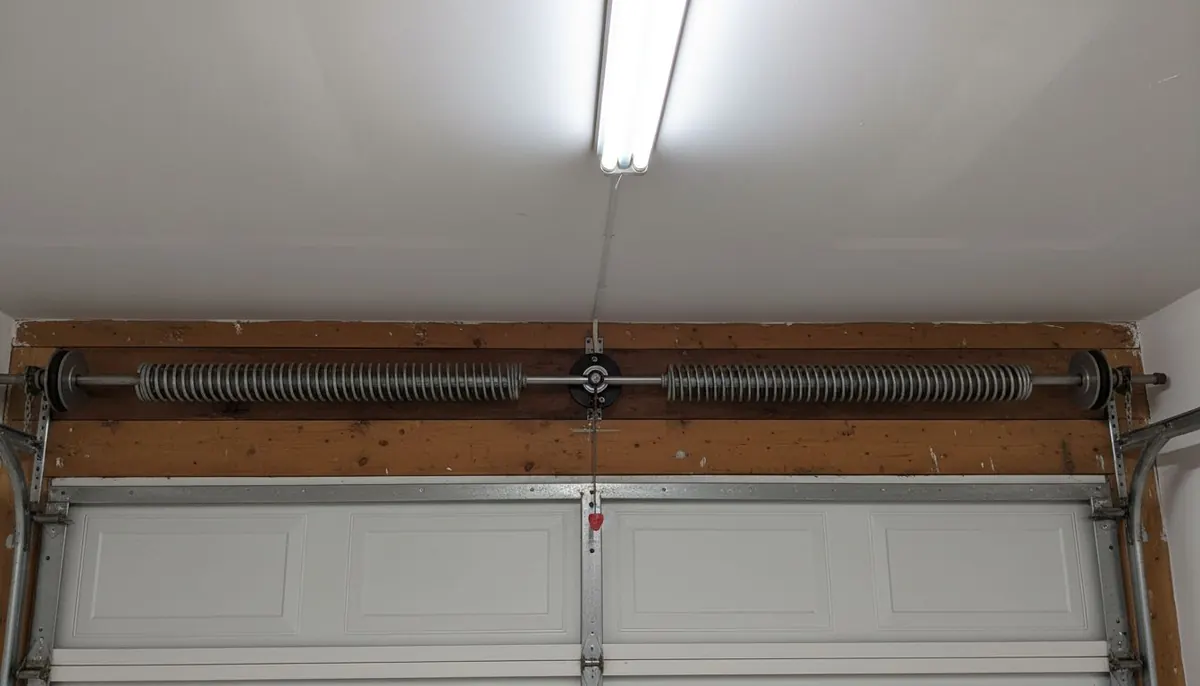
Torsion vs extension garage door springs in Murfreesboro, TN comes down to where the spring sits and how it stores energy. A torsion spring mounts on a steel shaft above the door and lifts by twisting. An extension spring runs beside each horizontal track and lifts by stretching. Torsion lasts 7 to 15 years or 10,000 to 20,000 cycles; extension lasts 4 to 12 years or 5,000 to 15,000 cycles, as of 2026.
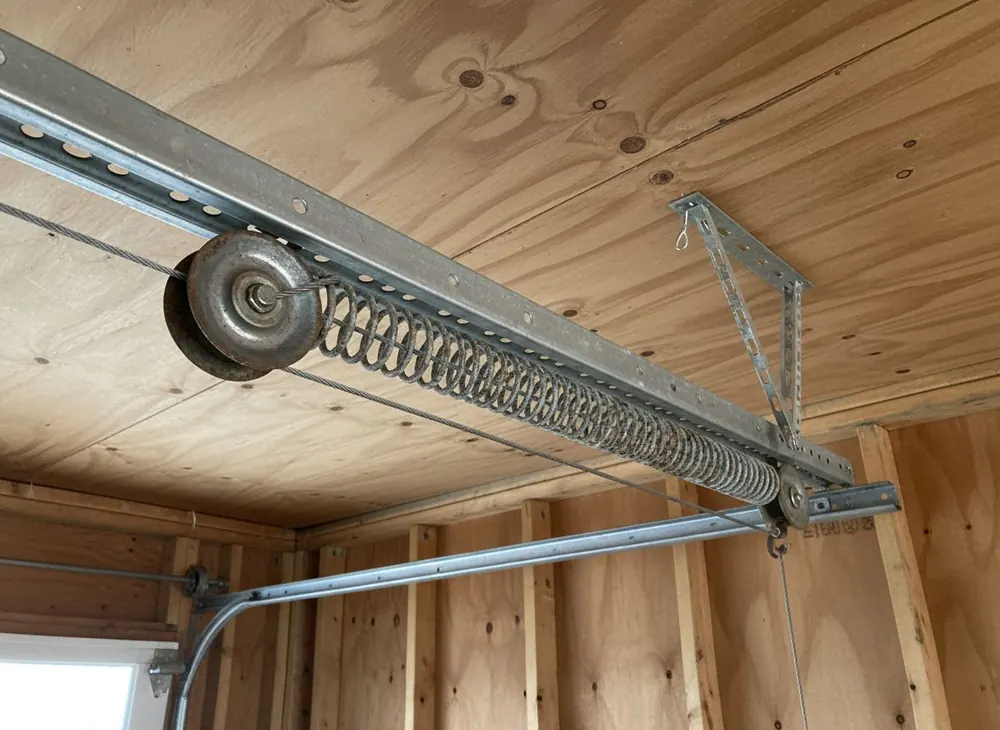
If your garage has a long spring running parallel to the ceiling tracks on each side, with a pulley at the end, you have extension springs. If there is a shaft above the door with a tightly wound coil on it, you have torsion. This page explains what each one means for safety, lifespan and the cost of getting a broken one replaced.
Request a Garage Door Repair Quote
Tell us what the door is doing, whether it is a single or a double, and the part of town you are in. Weekday requests get a reply the same working day, and the price is confirmed on site before any work starts.
How a Torsion Spring and an Extension Spring Each Lift a Door
Torsion: twist on a shaft
The spring is wound a set number of turns onto a shaft that runs the width of the door. Cable drums at each shaft end wind the lift cables as the door rises. Both cables move together, so the door stays level, and a broken torsion spring stays on the shaft.
Extension: stretch beside the track
One spring per side stretches as the door closes and contracts to pull it open through a pulley and cable. Each side works on its own, so uneven wear pulls the door crooked. A broken extension spring without a safety cable through it is a loose coil under load.
Where each shows up in Murfreesboro
Most of the city housing stock is post-2000 and came with torsion systems on 16 ft doors. Extension springs turn up on single doors in older core neighborhoods, on detached garages, and on low-headroom conversions where there was no room for a shaft.
Parts and Specs on a Torsion Spring Assembly
Reading the spec: inside diameter by wire by length
A torsion spring is written as inside diameter by wire size by length, for example 2 inch by .243 by 28 inch. The wire size sets strength, the length sets how many cycles it can take at a given load, and the inside diameter has to match the shaft and cones. Doors 7 ft tall commonly take 25 inch springs; 8 ft doors take 27 inch.
Cones, drums and bearing plates
Each torsion spring has a stationary cone bolted to the center bearing plate and a winding cone at the free end where the tension is set. End bearing plates carry the shaft at each side of the opening; cable drums sit outboard of them. When any of these are worn, a spring swap alone does not fix the door.
The cycle table
One cycle is one open and close. A supplier table for a 2 inch, .243 wire, 28 inch spring shows 8 turns of wind for 10,000 cycles, 6.6 turns for 25,000, 5.7 for 50,000, 5.2 for 75,000 and 4.9 for 100,000. Standard residential springs are the 10,000-cycle grade; 25,000 is the usual high-cycle option, and max-life springs run 80,000 or more, as of 2026.
How We Convert an Extension Door to Torsion
-
Headroom and door weight check
A torsion shaft needs room above the door opening. We measure headroom, weigh the door, and confirm the header can take the center bearing plate before quoting.
-
Remove the extension hardware
With the door closed and clamped, both extension springs, pulleys, and cables come off. The horizontal tracks and hangers are checked while the load is off them.
-
Fit the shaft, plates, drums and springs
End bearing plates and a center plate go on the header, the shaft and drums are set, new lift cables run to the bottom brackets, and the springs are wound to the turn count the door weight calls for.
-
Balance, then opener force check
The door should hold at the halfway point by hand. Then we reset the opener travel and force limits and run the 2x4 contact reversal test; the door must reverse within 2 seconds of contact.
The Numbers That Decide Spring Life
Lifespan by type
National guides put torsion at 7 to 15 years and extension at 4 to 12. The gap shows in the cycle ratings: 10,000 to 20,000 for torsion against 5,000 to 15,000 for extension.
Cold weather and fatigue
Spring steel is more brittle when cold, and fatigue cracks from thousands of cycles propagate on the first lift of a freezing morning. Murfreesboro has a cold season from November 28 to February 26 with a January average low of 31 F, which is why either type of spring tends to go in winter. A high-cycle torsion spring is the one upgrade that moves that date out.
What a Conversion to Torsion Costs in Murfreesboro
Extension to torsion conversion: $400 to $800 or more per door
National cost guides from 2025 and 2026 agree on the band; the exact figure depends on headroom, door weight and existing hardware, so we quote on site.
| Scope | Typical range | What it covers |
|---|---|---|
| Replace extension springs as a pair | $120 to $200 per door | Like-for-like, safety cables fitted or checked. |
| Replace torsion springs as a pair | $150 to $350 per door | Standard door; $250 to $450 on a heavy insulated double. |
| Convert extension to torsion | $400 to $800 or more per door | Shaft, drums, bearing plates, cables and springs. |
What moves the price
- Headroom above the opening: a low-headroom door may need a different track and shaft setup.
- Door weight: an insulated or wood door needs heavier springs, $250 to $400 on an insulated door.
- Existing hardware: a shaft and plates already in place lower the parts bill.
- Cable condition: spring and cable together runs $200 to $500.
- Cycle rating chosen: high-cycle springs carry a premium we quote per job.
A 16 ft steel door from the late 1990s in a 37129 neighborhood still on extension springs, one snapped. Like-for-like replacement is $120 to $200. A conversion to a two-spring torsion system runs $400 to $800 or more and brings the door into the 7 to 15 year torsion lifespan band. For a door this size and age, we usually recommend the conversion.
Why Murfreesboro Homeowners Ask Us About Torsion
A straight recommendation, with the numbers
On a light single door, like-for-like extension springs are the sensible repair. On a double door, conversion usually pays back in lifespan and safety.
Springs measured, not guessed
Inside diameter, wire size and length are measured against the door weight, so the spring is wound to the right turn count and the opener is not fighting the door.
One visit, written price first
Conversions are done in a single visit with an itemized quote before the hardware comes off, in line with the Tennessee Attorney General guidance on home repair bids.
Torsion and Extension Questions
Which spring type is safer?
Torsion, mainly because a broken torsion spring stays on its shaft. A broken extension spring is a loose steel coil unless a safety cable runs through it. If you have extension springs and no cable inside them, that is a quick fix we do on any visit. Neither type should be adjusted without the right bars.
How many cycles should I buy?
A standard 10,000-cycle torsion spring suits a door that moves a few times a day. A 25,000-cycle spring costs more up front and is rated for two and a half times the cycles. If the garage is your front door in a two-car household, the high-cycle spring is usually the better buy.
Can every door be converted to torsion?
Most can. The limit is headroom above the opening for the shaft and the strength of the header to carry the center bearing plate. Low-headroom garages sometimes need a different track configuration, which track repair and replacement covers.
What do the colours on the spring mean?
DASMA publishes official colour codes for torsion and extension springs in Technical Data Sheet 171, so the paint on a spring end identifies its size class. A past repair may have fitted the wrong one, so we measure inside diameter, wire and length directly.
My opener still runs. Does the spring type matter?
Yes. The opener is built to guide a balanced door, not to lift its full weight. When a spring weakens, the drive gear or trolley wears out early. If the opener has started struggling, we check the spring balance first because that is usually the cause.
Related Spring and Door Work
Replacing a snapped spring is a same-visit repair; this page explains the parts behind the price.
New lift cables go on with every torsion conversion and with most spring swaps on older doors.
A heavier insulated door needs its springs sized to the new weight, not carried over from the old door.
Door Stuck? Tell Us What It Is Doing
A door that will not lift, hangs crooked, or stops a few inches off the floor is usually one failed part. Call during posted hours or send the symptoms and we will come out, name the part, and put an itemized price in front of you before we touch it.