Garage Door Tune Up in Murfreesboro, TN
One visit a year that lubricates, balances and safety-tests the door, tightens what has worked loose, and tells you plainly which part is next to fail.
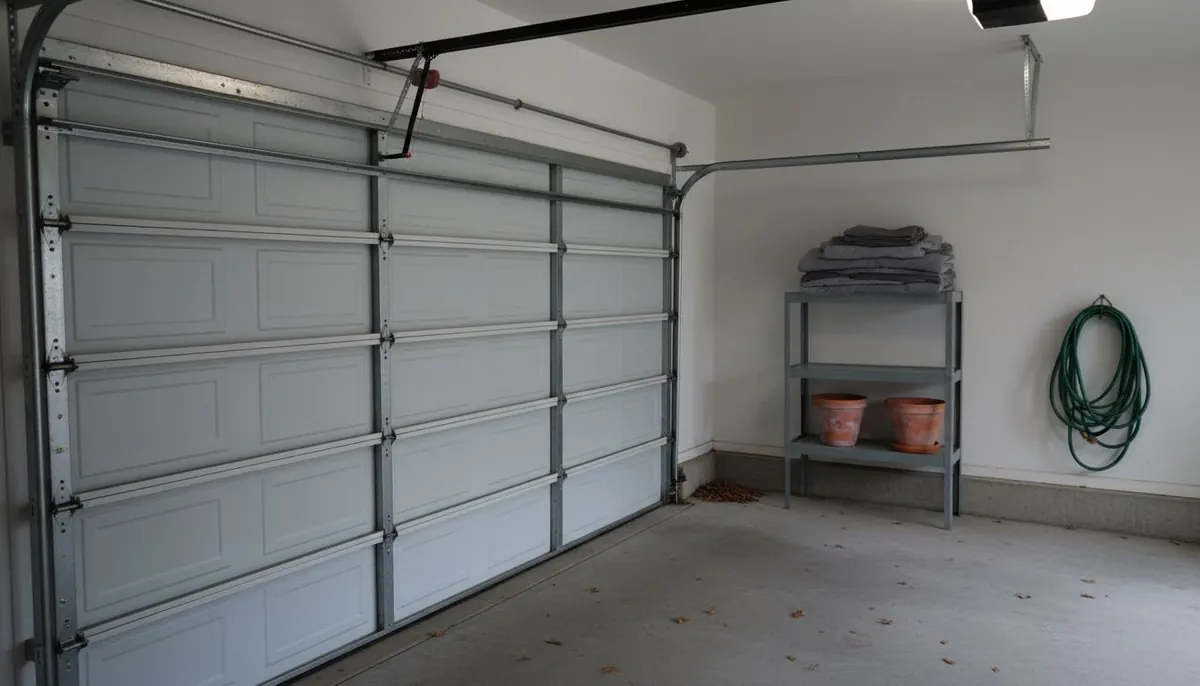
Garage door tune up in Murfreesboro, TN costs $100 to $200 as of 2026 and covers the full checklist: lubrication of every moving point, a spring balance test, the contact and photo-eye reversal tests, an opener force and travel check, and tightening of every hinge, bracket and track fastener. A $40 to $80 lube-and-tighten visit is a different, smaller service. Ours ends with a written note of what is worn.
The door runs on parts with a known life: springs 7 to 15 years, standard rollers 5 to 7, openers 10 to 15. With the city's median home built in 2002, a lot of original hardware is inside that window right now. A tune up finds the spring that is about to go before it goes on a January morning.
Request a Garage Door Repair Quote
Tell us what the door is doing, whether it is a single or a double, and the part of town you are in. Weekday requests get a reply the same working day, and the price is confirmed on site before any work starts.
Every Item on Our Tune Up Checklist
Lubrication of the Moving Points
Hinge knuckles, roller stems and bearings, the torsion spring coils, the end and centre bearing plates and the opener rail or chain.
Spring Balance Test
With the opener disconnected, the door should hold still at mid-travel by hand. A door that drifts down is under-sprung and making the opener do the lifting.
The Two Reversal Tests
A board laid flat in the door path: the closing door must reverse on contact. Then the photo-eye beam is broken while the door closes: it must reverse. These are the tests the CPSC asks homeowners to run every 30 days.
Fasteners, Cables and Rollers
Every hinge bolt, track bracket, header lag and opener mount is checked for tightness. Lift cables are inspected for fraying at the drum and the bottom bracket. Rollers that wobble are flagged with a price to replace.
Garage Door Lubrication Points and the Parts That Wear Out
Hinges, numbered 1 to 5
Centre hinges are all number 1; edge hinges count upward from the bottom joint. A hinge cracked at the knuckle is a $5 to $40 part to swap before it tears the skin.
Rollers and their bearings
A 7 foot four-section door runs on 10 rollers. Standard rollers last 5 to 7 years; sealed nylon rollers run 10 or more. A 13-bearing nylon roller is rated 20,000 cycles against 10,000 to 15,000 for a 10-bearing roller and 5,000 to 10,000 for plastic.
Torsion springs and the cycle count
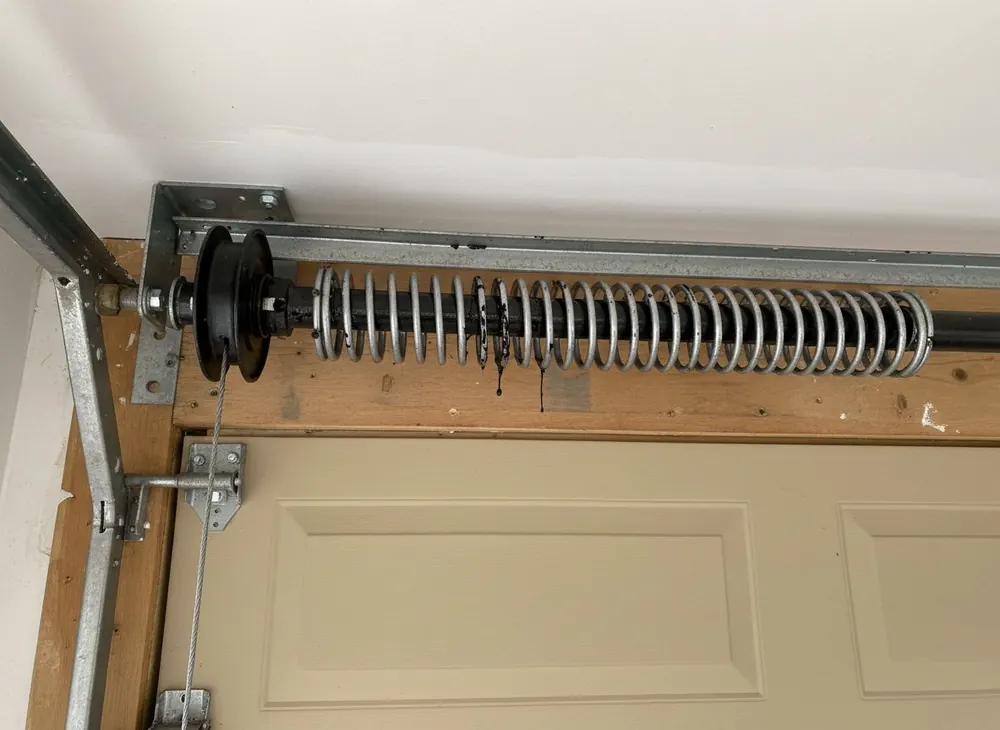
Standard torsion springs are rated 10,000 cycles and last 7 to 15 years; at four cycles a day they are used up in about seven years. Lubricating the coils slows rust from the 55.92 inches of annual rain, but it does not add cycles.
The opener, its force setting and its sensors
A force setting turned too high masks an unbalanced door and defeats the safety design. The photo eyes should sit no higher than 6 inches off the floor, and eyes knocked out of line are the usual reason a door refuses to close.
How a Tune Up Visit Runs, Hinge by Hinge
-
Watch the door run, then disconnect it
We run the door on the opener and listen, then pull the release cord and move it by hand.
-
Inspect, tighten, lubricate
Bottom to top on each side: bottom bracket and cable, hinges and rollers, track and brackets, then the shaft, drums, bearings and springs.
-
Balance, then reconnect and test the opener
With the door balanced by hand, we reconnect the opener, check force and travel limits, run both reversal tests and confirm the photo eyes are aligned and secure.
-
Written findings before we leave
You get a short list: what was done, what is worn, what it would cost to fix now and what can wait.
Garage Door Noise When Opening and Closing, and the Tests We Run
Grinding, squealing, popping and what each means
Squealing is almost always dry metal: hinge knuckles, roller stems or the spring coils asking for lubricant. Grinding points at worn rollers, dry bearings or a roller dragging in a track that has shifted. A pop at one spot in the travel is usually a cracked hinge or a roller with a flat spot. A rattle through the whole run on a 16 foot door is often loose fasteners. None of these sounds is an emergency by itself. A door that is crooked, or a cable hanging slack, is a reason to stop using the opener and call.
The contact and photo-eye tests and the standard behind them
16 CFR Part 1211, the federal safety standard, applies on every residential opener made from January 1, 1993 onward. It requires a downward moving door to reverse within 2 seconds of contact with an obstruction, plus a secondary system, photo eyes or an edge sensor. The CPSC test is a 2 by 4 laid flat in the door path; if the door does not reverse, the opener should be disconnected until repaired. DASMA Technical Data Sheet 364 puts the beam no higher than 6 inches above the floor; the CPSC says 4 to 6 inches.
The age math on a Murfreesboro door
The city's median home was built in 2002; in 37128 the median is 2008 and in 37129 it is 1999. A door from the early 2000s on original hardware is past the midpoint for springs and opener at once. The cold season, November 28 to February 26 with a January average low of 31 F, is when fatigued springs break. A tune up in October finds the door that will not hold mid-travel while it is still a scheduled replacement.
Garage Door Tune Up Cost in Murfreesboro, as of 2026
Full garage door tune up: $100 to $200 per visit
National 2026 cost guide ranges. Repairs found on the visit are quoted separately in writing.
| Scope | Typical range | What it covers |
|---|---|---|
| Full tune up, single door | $100 to $200 per visit | Lubrication, balance, both reversal tests, force and travel, fasteners, written findings. |
| Tune up plus door balancing adjustment | $150 to $350 per visit | Adds a $50 to $150 spring adjustment when the door will not hold mid-travel. |
What moves the price
- Number of doors: a second door at the same visit shares the trip.
- Door size: a 16 foot double has twice the hinges and rollers and usually two springs.
- Parts found worn: hinges and brackets $5 to $40 each, a full set of sealed nylon rollers $300 to $500 installed.
- Trip fee: $50 to $75 is the national band, stated when you book.
A 16 by 7 door from 2004 on original hardware: tune up in the $100 to $200 band. The visit finds two cracked hinges, $5 to $40 each fitted on the spot, and a door that drifts from mid-travel, so springs are quoted at $150 to $350 a pair as a scheduled job.
Why Homeowners Book a Yearly Tune Up With Us
Both safety tests, every visit
Contact reversal and photo-eye reversal are run and the result is written down.
Worn parts priced, not pushed
The findings sheet lists what is worn with a price and a rough timeline.
Timed to the season
We suggest autumn, before the cold stretch that breaks tired springs.
Tune Up Questions Homeowners Ask
How often should a garage door be serviced?
Once a year for a full tune up, with the two reversal tests run by you every 30 days as the CPSC recommends. A double on original springs older than seven years is worth a look every six months. Autumn is the useful slot, ahead of the cold season.
What should I use to lubricate my garage door between visits?
A garage door lubricant made for the job, applied to hinge knuckles, roller bearings, spring coils and the bearing plates at the ends and centre of the torsion shaft. Supplies for a year run $20 to $40. Do not grease the track; wipe it clean instead.
Does the tune up cover the opener too?
It covers the opener's force and travel settings, rail or chain lubrication, the mount and the photo eyes, plus both reversal tests. It does not include opening the motor head. A worn gear or board inside moves into a separate opener repair and we price it before touching it.
What does the door failing the 2 by 4 test mean?
That the opener is not reversing on contact as 16 CFR 1211 requires, so it would not stop on a person or a car either. The cause is usually a force setting turned up to hide an unbalanced door. The CPSC advice is to disconnect the opener until it is repaired, and we say so in writing.
Repairs a Tune Up Often Catches Early
A spring at the end of its cycles is the most valuable thing a balance test finds.
Rollers and hinges are the parts behind most of the noise we are called about.
Photo eyes that fail the beam test are realigned or replaced on a short follow-up visit.
Door Stuck? Tell Us What It Is Doing
A door that will not lift, hangs crooked, or stops a few inches off the floor is usually one failed part. Call during posted hours or send the symptoms and we will come out, name the part, and put an itemized price in front of you before we touch it.